

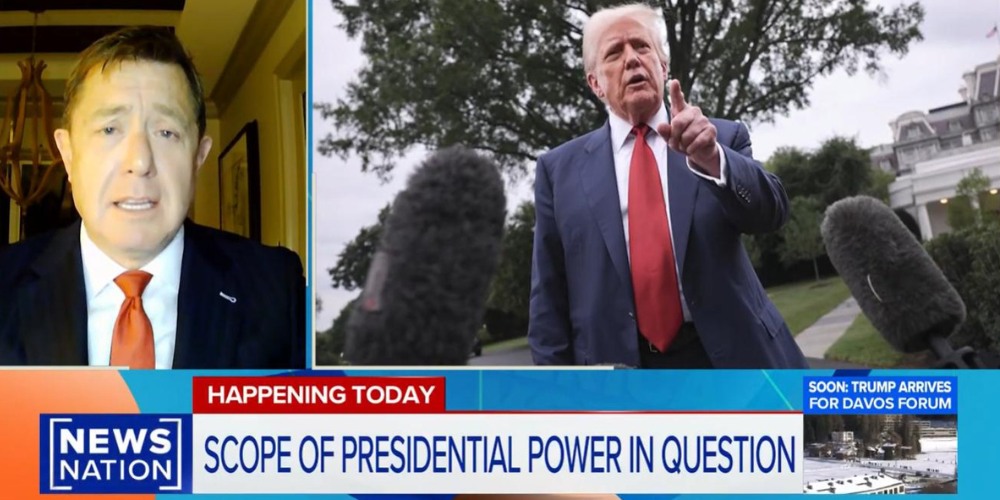
Last week, I joined NewsNation to discuss a highly unusual and consequential dispute involving the Federal Reserve, the White House, and the U.S. Supreme Court. At issue are allegations against Federal Reserve Governor Lisa Cook, questions of presidential authority, and the unprecedented decision by Federal Reserve Chair Jerome Powell to personally attend a Supreme Court hearing involving one of his own governors.
As a former Assistant U.S. Attorney for the Southern District of Texas, I was asked to weigh in on the legal, constitutional, and institutional implications of these events. Below is a summary of the key legal issues and why they matter far beyond this single case.
Unprecedented Optics at the Supreme Court
One of the most striking developments is Fed Chair Jerome Powell’s decision to sit in the audience during Supreme Court arguments involving Governor Cook. This is, quite simply, unprecedented.
From a legal and ethical standpoint, the appearance alone is problematic. A Federal Reserve Chair does not speak solely for himself—his actions can be perceived as representing the entire Board of Governors. By attending the hearing, Chair Powell risks signaling institutional alignment with one party in ongoing litigation, which undermines the Fed’s long-standing posture of independence and neutrality.
If I were advising him as counsel, my advice would be clear and unequivocal: stay away. The optics are bad, and the decision exposes the institution to unnecessary risk.
Likely Outcome at the Court—and Why It Could Change
Based on prior lower-court rulings, my initial assessment is that the Supreme Court is likely to rule in Governor Cook’s favor, allowing her to remain on the Board while litigation continues. However, this case did not need to become more complicated than it already is.
Ironically, the presence of the Fed Chair himself could harm Cook’s position. Supreme Court justices are acutely sensitive to institutional pressure, and any perception that they are being watched—or worse, influenced—by a powerful federal official can backfire.
Due Process and the Misuse of the Fifth Amendment
Governor Cook has argued that her Fifth Amendment due process rights were violated when her termination letter was posted on social media by the President.
Legally speaking, this argument misunderstands due process. Posting information on social media—however distasteful or unprofessional- is not, by itself, a constitutional violation. Due process concerns arise when the government deprives someone of life, liberty, or property without notice and an opportunity to be heard. A social media post does not trigger those protections.
What due process may require, however, is notice and a hearing before final removal from a position of this magnitude. Those are separate issues and conflating them weakens the legal argument.
What’s Really at Stake: Oversight of the Federal Reserve
If the Court ultimately sides with the President and affirms executive authority to remove Federal Reserve governors, the precedent would be significant—but not necessarily catastrophic.
Such a ruling would clarify that the Federal Reserve is not untouchable or immune from oversight. That does not mean the Fed loses its independence; it means accountability still exists.
Serving as a Federal Reserve Governor is one of the most powerful economic positions in the country. With that power comes responsibility. Anyone occupying that role must expect their financial records and personal conduct to be beyond reproach. Transparency is not optional—it is the cost of public trust.
Institutional Trust Matters
The Federal Reserve, historically a consortium rooted in private banking, has grown into one of the most trusted economic institutions in the United States. That trust is fragile. Actions by individual governors—or the Chair himself—that appear politicized or imprudent threaten not just personal credibility, but institutional legitimacy.
Unfortunately, that broader institutional risk appears to be missing from the current public conversation.
Final Thoughts
This case is about far more than one governor or one president. It raises foundational questions about independence, accountability, due process, and the proper boundaries between law and politics.
As the Supreme Court considers its decision, the legal community—and the public—should pay close attention. The outcome will shape the balance of power for future administrations and the future governance of the Federal Reserve itself.
— Michael Wynne,
Former Assistant U.S. Attorney, Southern District of Texas and Current Partner, Gregor Wynne Arney
You can watch the entire interview on News Nation here.